If you’re a marketer for a business, this might sound familiar: You’ve got something exciting to share, a new product launch, an upcoming event, or a stunning project your team just wrapped up. Naturally, you want photos that do it justice, but hiring a photographer is expensive, hard to schedule, and slow. So you reach for your phone and snap a few photos… but it doesn’t look the way you imagined.
Here’s the good news:
Professional-looking photos aren’t just for big brands with big budgets anymore. Smartphones have leveled the playing field for anyone willing to learn a few basics.
In this guide, you’ll discover how to unlock your phone’s potential to capture professional, on-demand visuals that build trust and attract the right customers.
Why Smartphone Photography Matters for Modern Businesses
You know the feeling: you’re scrolling, half-focused, and then one photo makes you stop. It pulls you in before you even realize why. That’s the power of visuals.
In just a split second, someone decides whether your brand looks:
- Trustworthy or risky
- Professional or unpolished
- Worth their time or easy to scroll past
But knowing why great visuals matter is step one. Next, let’s talk about how to create them.
1. Start with Intention: What to Photograph
Before you lift your phone, pause and ask:
- What story am I trying to tell?
- What do I want someone to feel when they see this?
Don’t overthink it, just be clear on your goal. You can’t hit a target if you don’t know what you’re aiming for.
If You’re Showcasing a Product
Your job is to help people picture the product in their hands and in their lives. A simple way to do that is to think about: Fit, Feel, and Frame.
1. FIT: Show how your product connects to people.
Show how people use your product in real life. Let someone hold it, try it, wear it, or open it. Catch the happy face when it works just right or the confident look when it does what they need. Those are the photos that make people think, “I want that. That could be me.”
2. FEEL: Show the good stuff up close.
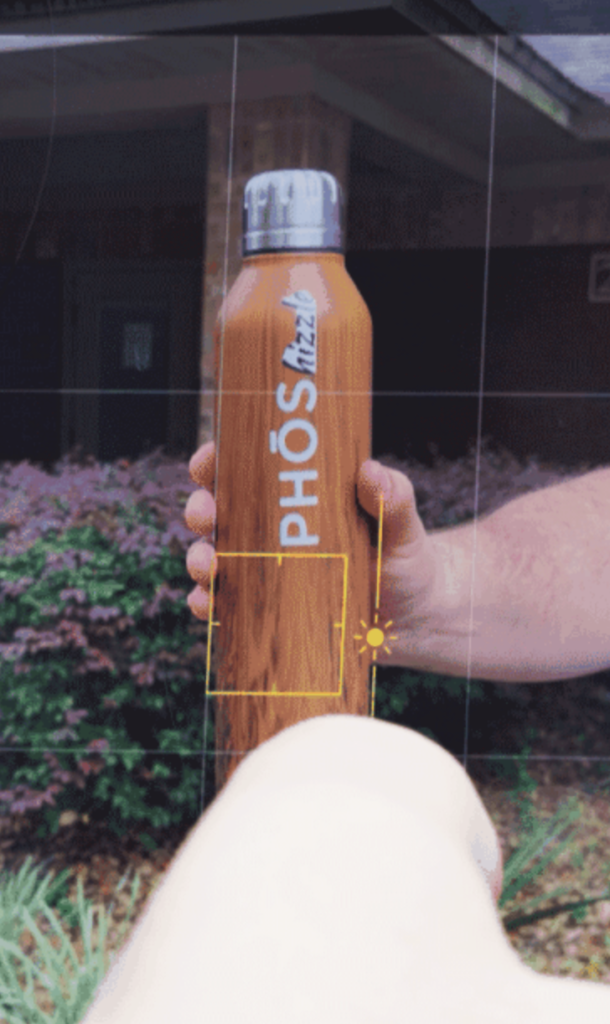
Get close. Photograph the details that make your product special: the texture of the fabric, the grain of the wood, the curve of the design. Invite people into the story behind your product.
3. FRAME: Show where it lives.
Showcase the product in its real environment: a kitchen mid-breakfast, a desk mid-project, a workshop with tools around it. Context answers: “Where would this fit into my life?”
If You’re Showcasing a Service
Capturing a service can be tricky—you can’t always show every detail or the full impact in one shot. Instead, focus on your people and your process. Answer these three questions with your photos:
1. What do you do?
Show your team doing the work: fixing, building, consulting, or filming. This tells people, “Yes, this is a real service. Real people do it.”
2. How do you do it?
Highlight your process: show your team collaborating at a table, fine-tuning details, or meeting with clients. These moments subtly say, “We care about our work, and we take pride in doing it well.”
3. Why do you do it?
Capture the emotional payoff: a happy client, your team celebrating a finished project, or staff smiling with a customer. These moments show the heart behind your business and remind people that your service actually helps people.
2. Find the Right Light: Your Secret Ingredient
Good lighting is like magic. It makes your photos look clean, clear, and professional, even if you’re using a phone.
First, look for good light. Natural light is your best friend.
- Stand near a window or open door
- Aim for soft, even light; not direct, harsh sun.
- Let the light hit your subject from the front or side, not from behind. Lighting from behind causes an eclipse-like effect for your subject.
If you don’t have great natural light, you can shape the light you do have.
- Use a ring light, LED panel, or even a simple desk lamp.
- Aim the light from the front or side, not directly overhead.
- Soften it by placing something white and partially opaque, like a T-shirt, thin bedsheet, or sheet of paper.
3. Compose with Care: Framing & Angles
Once your lighting looks good, it’s time to think about how you take the photo, also known as your composition. It’s a fancy word to describe where you put your main subject, what’s around it, and what people notice first. Here are some of the basics.
Start with Gridlines
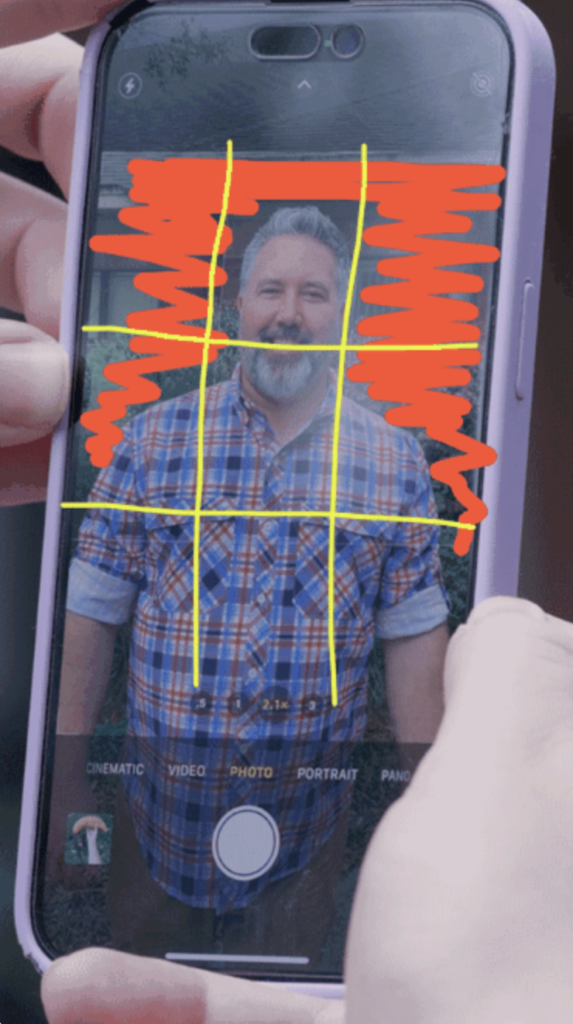
- Turn on gridlines in your camera settings (the tic-tac-toe overlay).
- Place your subject slightly off-center, where the lines intersect.
This “rule of thirds” makes images feel more natural and less stiff.
Keep the Background Clean
Before you tap the shutter, clean the clutter! As you scan the background, look for the following: See cords, dishes, clutter, or a trash can? Move them, or change your angle.
You want people to notice your product or service, not the stack of papers behind it (unless you work at Dunder Mifflin).
Try Different Angles
Three simple angles cover most situations:
- Eye-level: This means holding the camera straight in front. It looks strong and clear. Great for close-up details.
- Overhead: This is when you take the photo from above. It’s neat and tidy, perfect for showing things on a table or desk.
- Angled: This means taking the picture from the side. It adds a fun look and works well for people or scenes.
Take a few pictures from each angle. You might like one more than the others, and sometimes, the best photo is not the one you’d expect.
4. Stay Focused & Steady: Get Sharp, Clear Shots
Even if you have great light and good angles, a blurry photo can still ruin everything. But don’t worry. These simple tips will help you take clear, steady pictures every time!
- Wipe Your Lens: Wipe your lens with a soft cloth or your shirt in a pinch. Tiny smudges create a haze, weird flares, and soft images.
- Tap to Focus: Tap the screen on your subject so your phone knows what to prioritize. Your phone will focus on it and make it sharp.
- Keep Your Phone Steady: Use a tripod, a phone stand, or brace your arms against a table or wall. Even small movements can blur a shot in low light.
- Check as You Go: Every few minutes, stop and review your photos. If something is blurry or off, fix it while you’re still in the moment rather than regret it after the fact.
5. Edit Thoughtfully: Enhance, Don’t Overdo
Editing should make your images look like the best version of reality, not totally different from it.
- Crop and Straighten: Crop out any amount of space that feels like too much. Rotate the photo and make sure it’s not tilted. These keep your subject in the center or where you want it.
- Fix the Light: If needed, make the photo a little brighter to add visibility to the subject.
- Fix the Color: If the photo looks too orange, it’s too warm. If it looks too blue, it’s too cool. Aim for colors that look like they do in real life or a slightly more vibrant version of them.
- Use a Preset or Filter: Some apps have presets and filters that add effects to your image, designed to make them pop. Experiment with a few and see if one fits your style and enhances how the picture looks.
Pro Tip: Keep It Simple
If you’re not sure what to do, lean toward “less is more.” Clean, natural-looking photos almost always feel more authentic and professional than heavily filtered ones.
Bonus Tip: Phone Photography Tools (Free and Paid)
You don’t need a big camera or a fancy studio to take great photos, but if you’re looking for a few helpful extras, here are some tools to make your pictures even better and easier to take!
Free/Freemium to Phone Photography Apps
Let’s start with some free editing apps you can use right on your phone:
- Snapseed: Helps you fix brightness, sharpness, and details easily.
- Lightroom Mobile: Great for in-depth editing and making all your photos match the same look.
- VSCO: Has fun filters and simple tools to change light and color.
Physical Tools to Consider
Now, here are some simple tools (some are super cheap!) that might be worth adding to your kit:
-
Tripod or Phone Stand: Keeps your shots steady and straight, so every photo looks clear and consistent.
-
Ring Light or Desk Lamp: Adds soft, even light that brightens your photo without harsh shadows. It’s perfect for indoor or cloudy-day shooting.
-
White Foam Board (or Paper): Reflects light back onto your subject to make everything look softer, brighter, and more natural.
-
Bluetooth Remote: Lets you take photos hands-free. No more racing the timer or struggling with awkward angles.
Frequently Asked Questions About Smartphone Photography for Business
Do I need the latest phone model?
Nope! Most phones from the last few years are more than capable. Great lighting and composition matter far more than camera specs.
Should I zoom in for product shots?
Try to avoid using digital zoom on your phone—it can make your photo look blurry or pixelated. Instead, move your phone closer to your subject or crop the photo later when editing. You’ll get a much sharper, cleaner image that way.
Should I shoot vertically or horizontally?
Vertical works best for social media, while horizontal is better suited for websites or printed materials. If you’re unsure, shoot both so you have options later.
How do I keep my brand visuals consistent?
Stick to a similar lighting setup, color tone, and a few go-to angles for most of your photos. Over time, your audience will begin to recognize and associate that style with your brand.
Should I use my phone’s flash?
Only as a last resort. Phone flashes are harsh and create strong shadows. Try a lamp, window light, or ring light instead. They’ll look much more natural.
How do I take good photos of people?
Use natural light, have them face toward the window (not away from it), and take a few candid shots while they work or interact. People tend to look best when they feel relaxed, not posed.
Photography Made Easy!
You don’t need a big camera or a fancy setup to take great photos. You already have what you need: your phone, your eyes, and your own unique way of seeing the world.
Every time you take a picture, you get to show what makes your business or idea special.
If you’re feeling unsure, that’s okay. Just start small. Take a photo of one thing, maybe a product you love, a project you’re proud of, or a moment that means something to you.
Lastly, be proud of what you share. When you take pictures with care and heart, people feel it. They notice. Good photos help people trust you. Great photos help them connect with you.
And you’re capable of both.
And if you need a little extra help? Well, we can help with that, too. At PHOS Creative, we offer professional photography services, or we can find the best ways to market the stellar photos you took based on this guide.
No matter your style, we’ve got you covered.
Share